Metal Roll Forming Machine for Roofing, Decking and Structural Profiles
Custom machinery for converting coiled sheet metal into roofing panels, metal deck, purlins, channels and continuous profiles. Configure the line around your product, material, gauge and production target.
Turn coiled metal into repeatable production profiles
A metal roll forming machine progressively bends coiled sheet through consecutive roller stations until the required cross-section is achieved. The process is suited to long parts with a constant profile and repeatable production requirements.
Roofing and Wall Panels
Machinery for standing seam, concealed-fastener, architectural and industrial roofing applications.
Metal Deck Profiles
Lines for decking and related construction profiles according to geometry, gauge and output.
Structural Profiles
Equipment for purlins, channels, studs, tracks and other constant-section components.
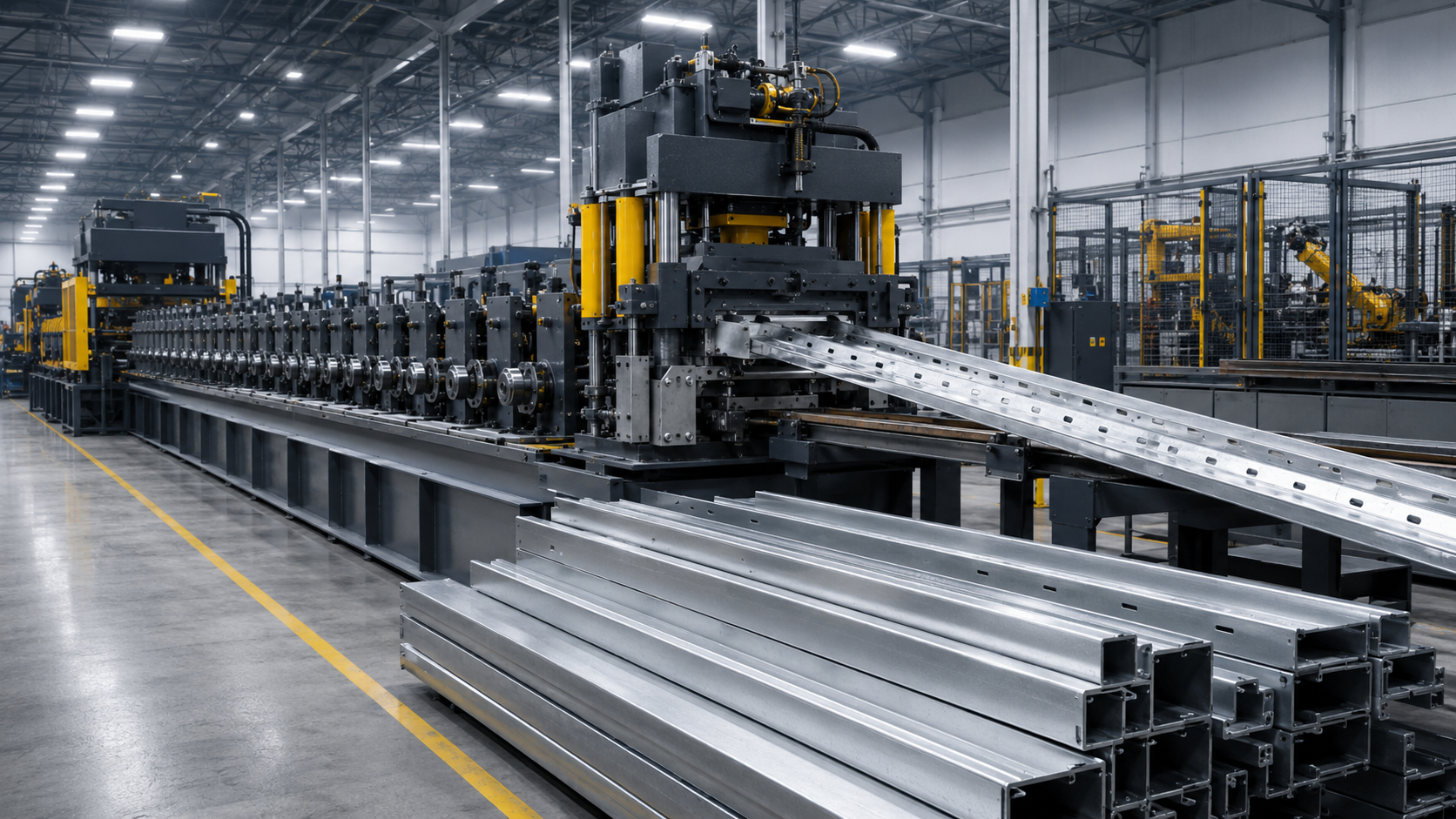
Metal products that can be evaluated for roll forming
- KR18 and KR24 roofing panels
- Standing seam and architectural wall panels
- Self-supporting arched roofing profiles
- R101, RN100 and related sheet profiles
- Losacero and metal deck applications
- C, Z, U, stud and track sections
- Special profiles based on customer drawings
What determines the correct metal roll forming line?
| Profile geometry | Bends, ribs, radii, return legs and tolerances determine tooling and forming sequence. |
|---|---|
| Material and coating | Steel grade, galvanized coating, painted sheet or other compatible material must be identified. |
| Gauge range | Thickness affects forming forces, tooling clearances, shafts, drive and structure. |
| Coil data | Width, weight, inner diameter and feeding conditions define the decoiler and entry system. |
| Cutoff system | Pre-cut, post-cut or profile-specific cutoff depends on the final product and workflow. |
| Production target | Output, shifts and automation requirements guide controls, drive and handling systems. |
Core systems in metal roll forming equipment
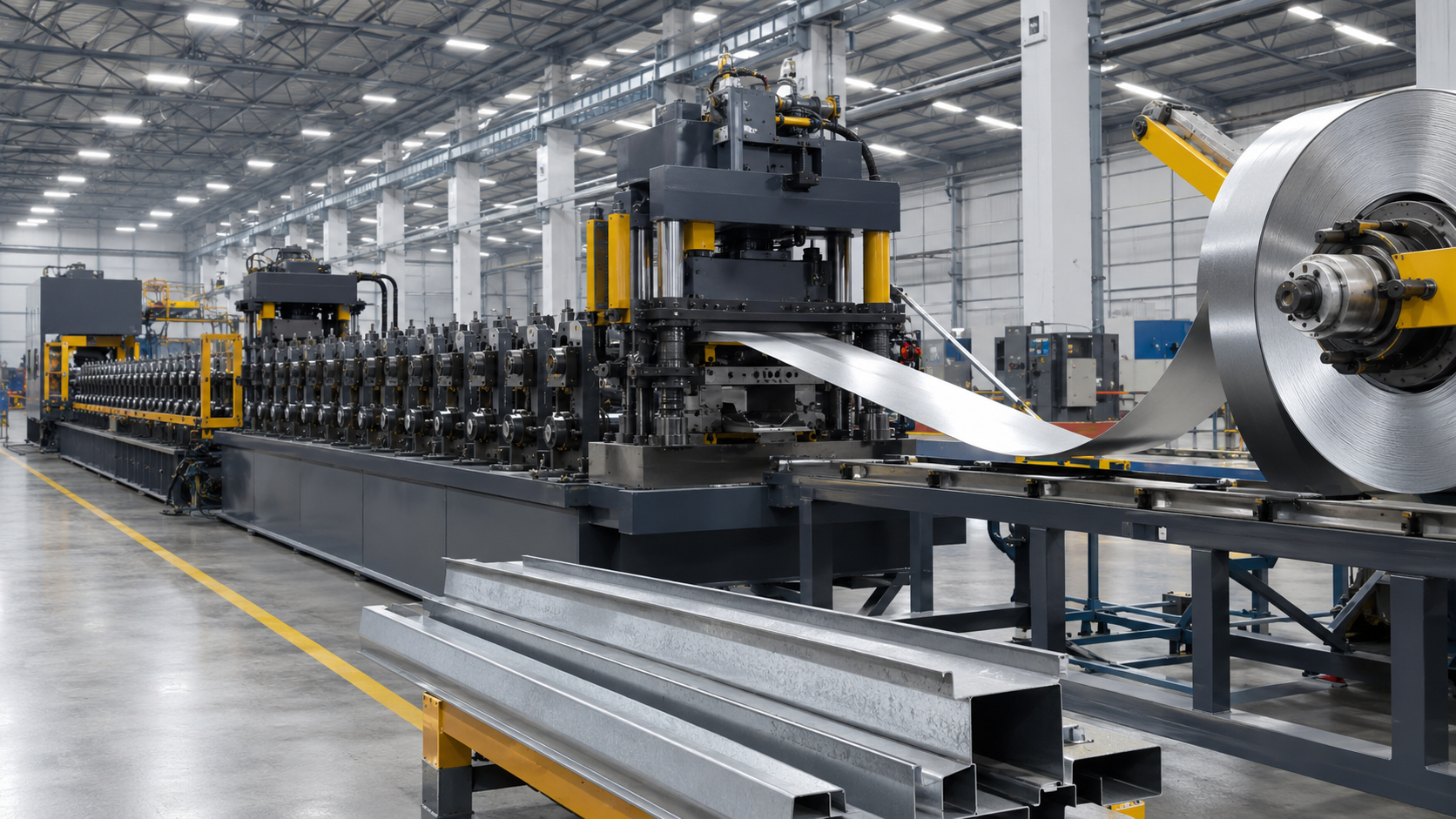
- Coil decoiler and feeding
- Entry guides and alignment
- Progressive forming stations and tooling
- Drive, transmission and machine frame
- PLC controls and length measurement
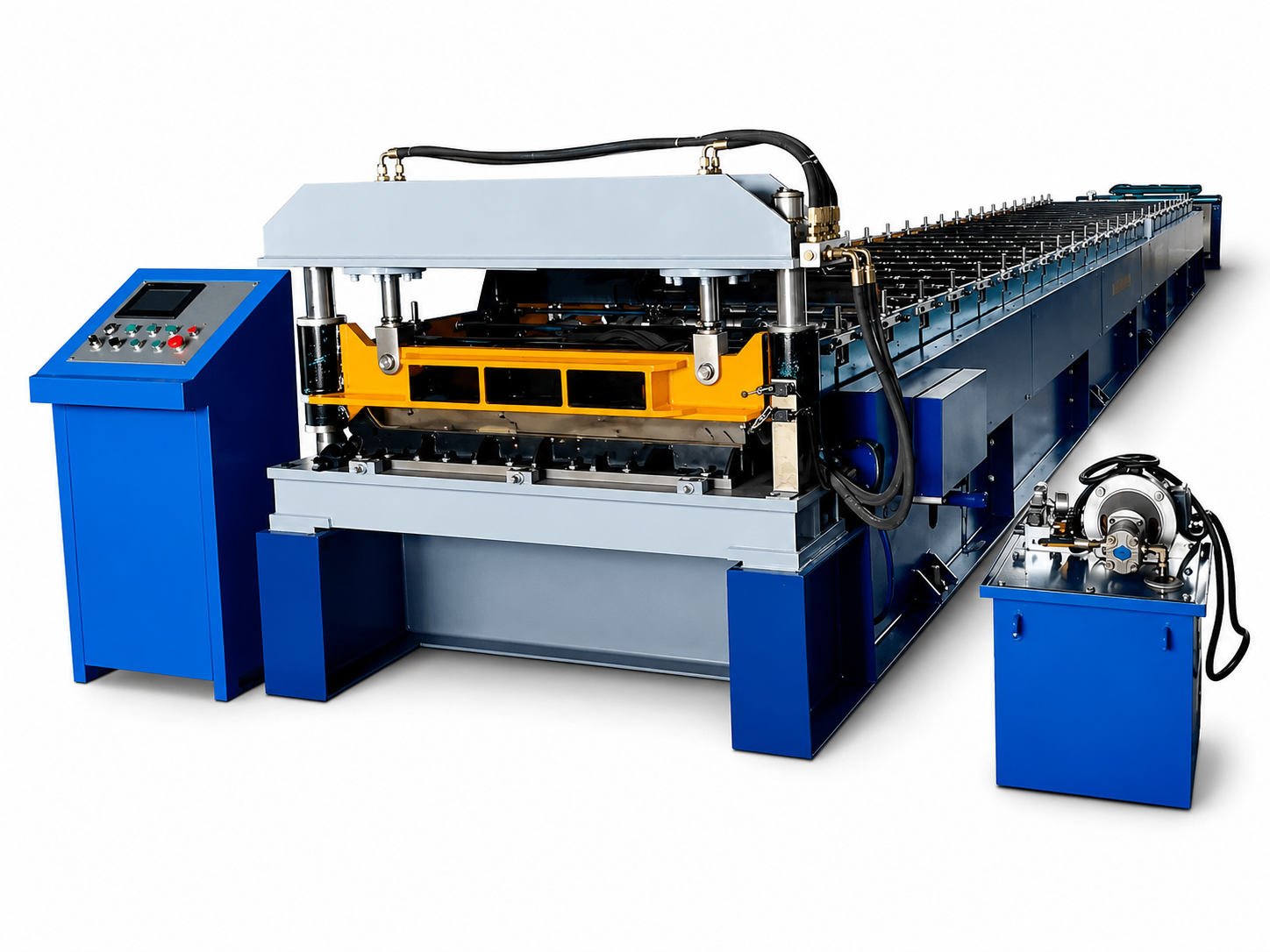
- Hydraulic or application-specific cutting
- Exit tables and complementary handling
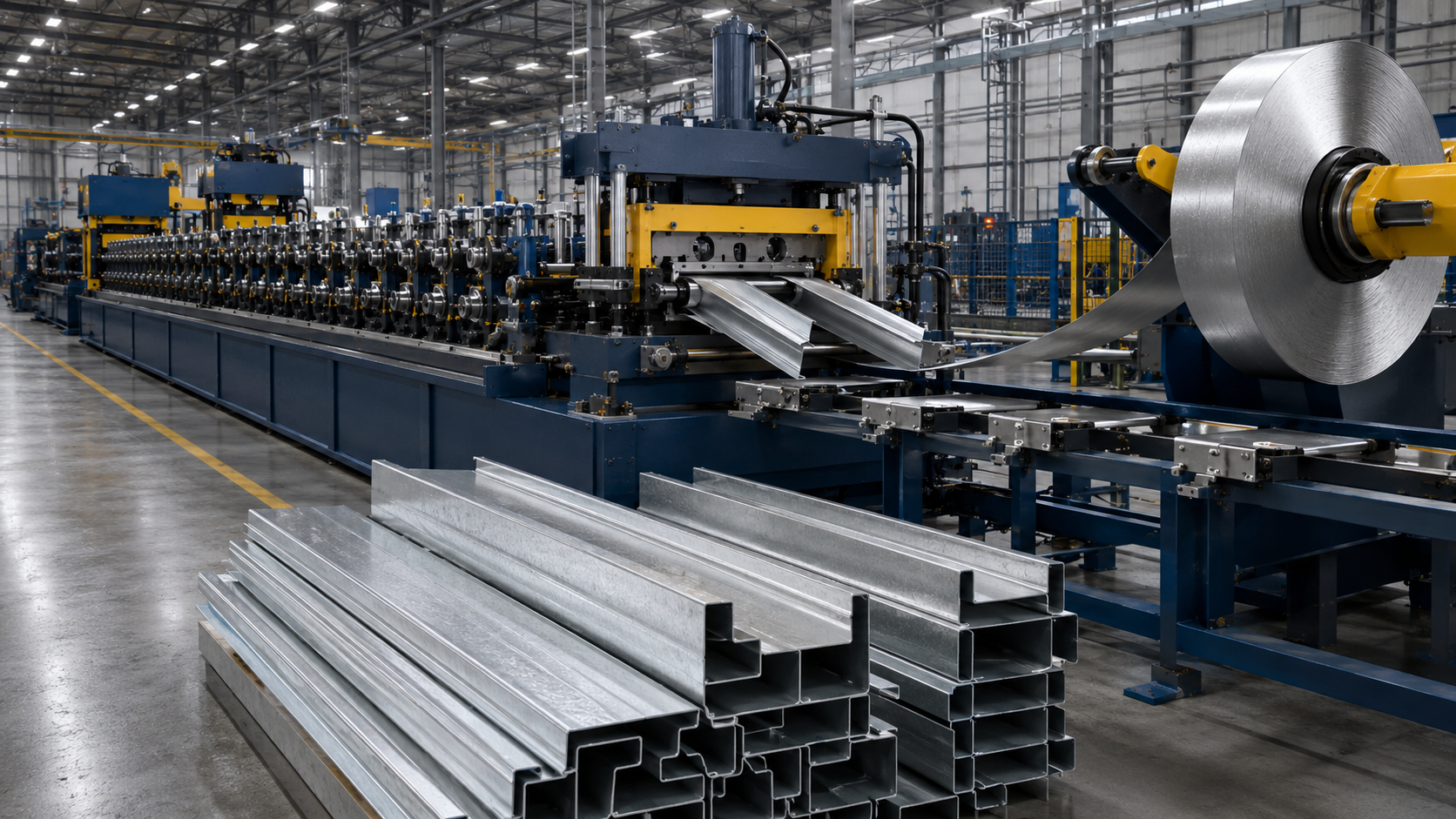
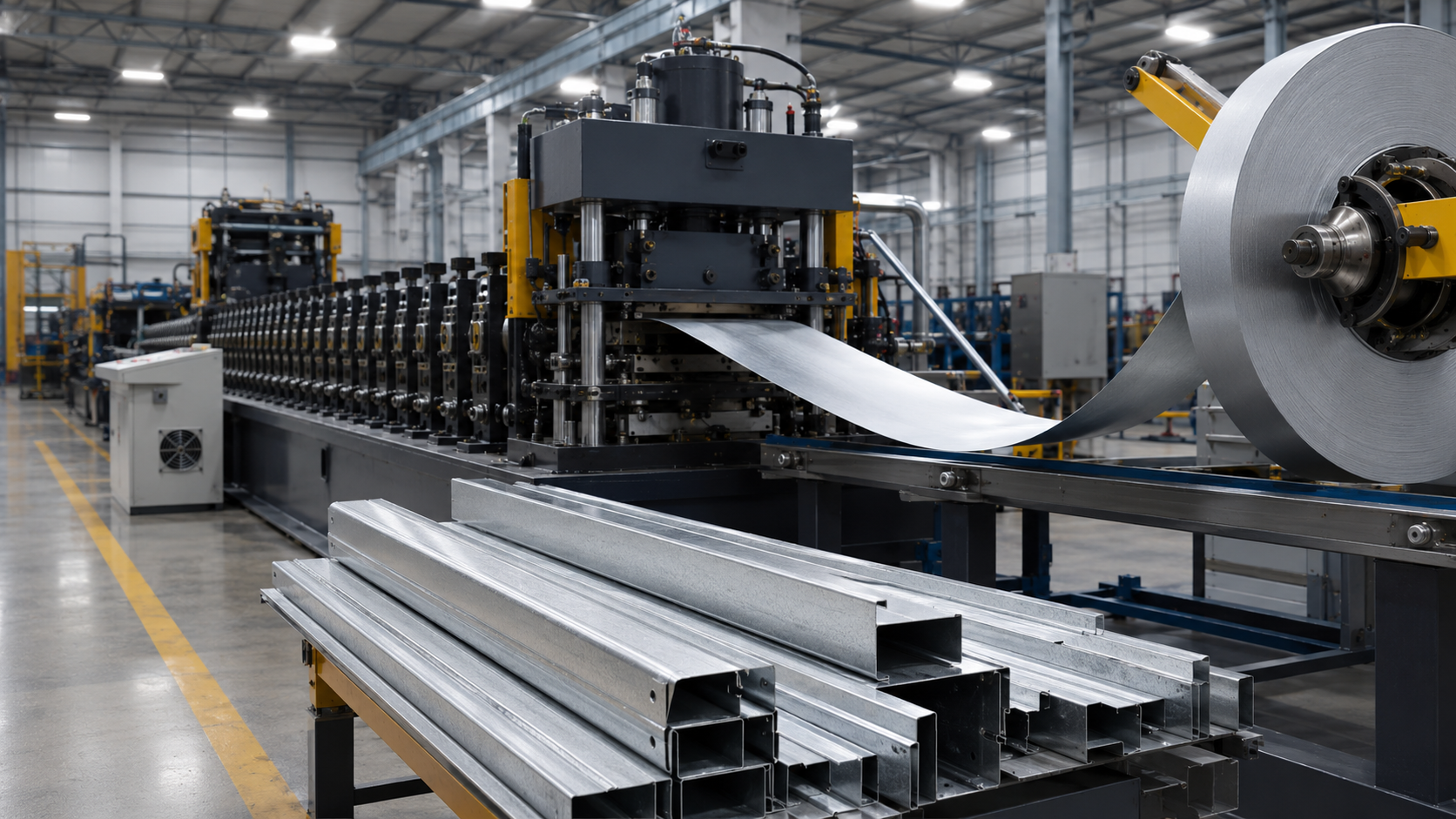
Machinery and production applications
These photographs are selected directly from the Rollforming.com.mx WordPress media library.
From your metal profile to a machine proposal
Send the profile
Share the dimensional drawing, sample or product specification.
Define production data
Confirm material, gauge, coil, output, power and destination.
Review the scope
Receive a proposal defining machinery, options and support.
Manufacture and coordinate
Production, testing, freight and startup are organized under the accepted scope.
Quote a metal roll forming machine for your U.S. operation
Send the profile, steel type, gauge range, output target and delivery city to receive a useful technical evaluation.
Metal roll forming machine FAQ
What does a metal roll forming machine produce?
It converts coiled sheet into long parts with a constant cross-section, including roofing panels, metal deck, purlins, channels, studs, tracks and custom profiles.
Can galvanized steel be roll formed?
Galvanized sheet is commonly used. The steel grade, coating, gauge and surface requirements must be reviewed for the profile and tooling.
Can a machine be built for a custom profile?
Custom profiles can be evaluated from a drawing or sample. Feasibility depends on geometry, material, tolerances, gauge and required operations.
What is included in a complete line?
A line may include a decoiler, guides, forming stands, tooling, drive, controls, measurement, cutting and exit handling. The quotation defines the scope.
How much does a metal roll forming machine cost?
Price depends on tooling complexity, stations, material range, automation, cutting, auxiliary equipment, freight and support.
Can the machine be shipped to the United States?
Rollforming serves U.S. projects. Freight, documentation, electrical configuration, installation and startup requirements are defined in the proposal.